Why Cybercriminals Target Small Businesses
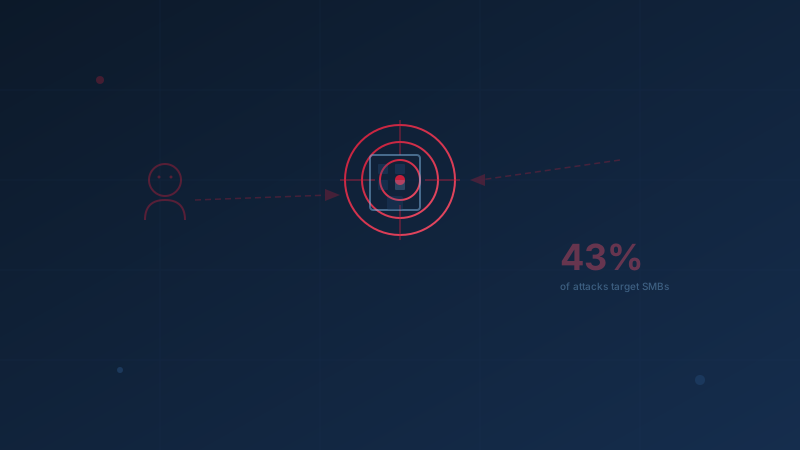
There's a persistent myth among small business owners: "We're too small to be a target." Unfortunately, the opposite is true. Cybercriminals increasingly prefer small and medium businesses precisely because they tend to have fewer defenses.
The Numbers
According to the Canadian Centre for Cyber Security, small and medium organizations are among the most frequently targeted by cyber threat actors. The reasoning is straightforward — SMBs often have:
- Valuable data — Customer records, payment information, employee data, and intellectual property
- Weaker defenses — Limited budgets, no dedicated IT security staff, and outdated systems
- Less monitoring — Breaches may go undetected for weeks or months
- Lower awareness — Employees who haven't received cybersecurity training
How Attacks Happen
Most attacks against small businesses aren't sophisticated. They rely on volume and automation:
Phishing
Fraudulent emails that trick employees into clicking malicious links or revealing credentials. This remains the number one attack vector for businesses of all sizes.
Ransomware
Malicious software that encrypts your files and demands payment for their return. Canadian businesses have been hit hard by ransomware, with some forced to close permanently after an attack.
Business Email Compromise
Attackers impersonate executives or vendors to trick employees into transferring funds or sharing sensitive information. These attacks are often well-researched and convincing.
Credential Stuffing
Automated attacks that try stolen username/password combinations from other breaches against your systems. If employees reuse passwords, this attack works.
The Real Cost
For a small business, a cyber incident can mean:
- Days or weeks of downtime while systems are restored
- Mandatory breach reporting under PIPEDA if personal information is involved
- Lost customer trust that takes years to rebuild
- Recovery costs that can exceed what many small businesses can absorb
What You Can Do Today
The good news is that basic security measures stop the vast majority of attacks. You don't need an enterprise security budget — you need the fundamentals:
- Enable multi-factor authentication on all accounts — this single step prevents most credential-based attacks
- Train your employees to recognize phishing emails
- Keep software updated — automatic updates close known vulnerabilities
- Back up your data with at least one copy offline or offsite
- Use a password manager and enforce strong, unique passwords
These measures align directly with the Canadian Centre for Cyber Security's Baseline Controls for small and medium organizations.
Not sure where your business stands? Our free assessment evaluates your security posture across all 13 Baseline Control areas in under 30 minutes.
Disclaimer: This article is intended for general informational purposes only and does not constitute professional cybersecurity, legal, IT, or compliance advice. While we strive to ensure accuracy, the cybersecurity landscape changes rapidly and information may become outdated. Organizations should consult with qualified cybersecurity professionals and legal counsel to assess their specific situation and develop appropriate security policies. Use of this information is at your own risk. See our Privacy Policy for more information.
Cybersecurity Canada is an independent resource and is not affiliated with, endorsed by, or connected to the Canadian Centre for Cyber Security, the Communications Security Establishment, or the Government of Canada.
How does your organization measure up?
Take our free cybersecurity assessment based on the Canadian Centre for Cyber Security's Baseline Controls. 50 questions, under 30 minutes, 100% confidential — your answers never leave your browser.
Take the Free Assessment